
Broken Champion Synergies in ARAM Mayhem Nobody Talks About
ARAM Mayhem's augment system hides some genuinely absurd champion combos that most players never see coming. Here are the most broken synergies flying under the radar.
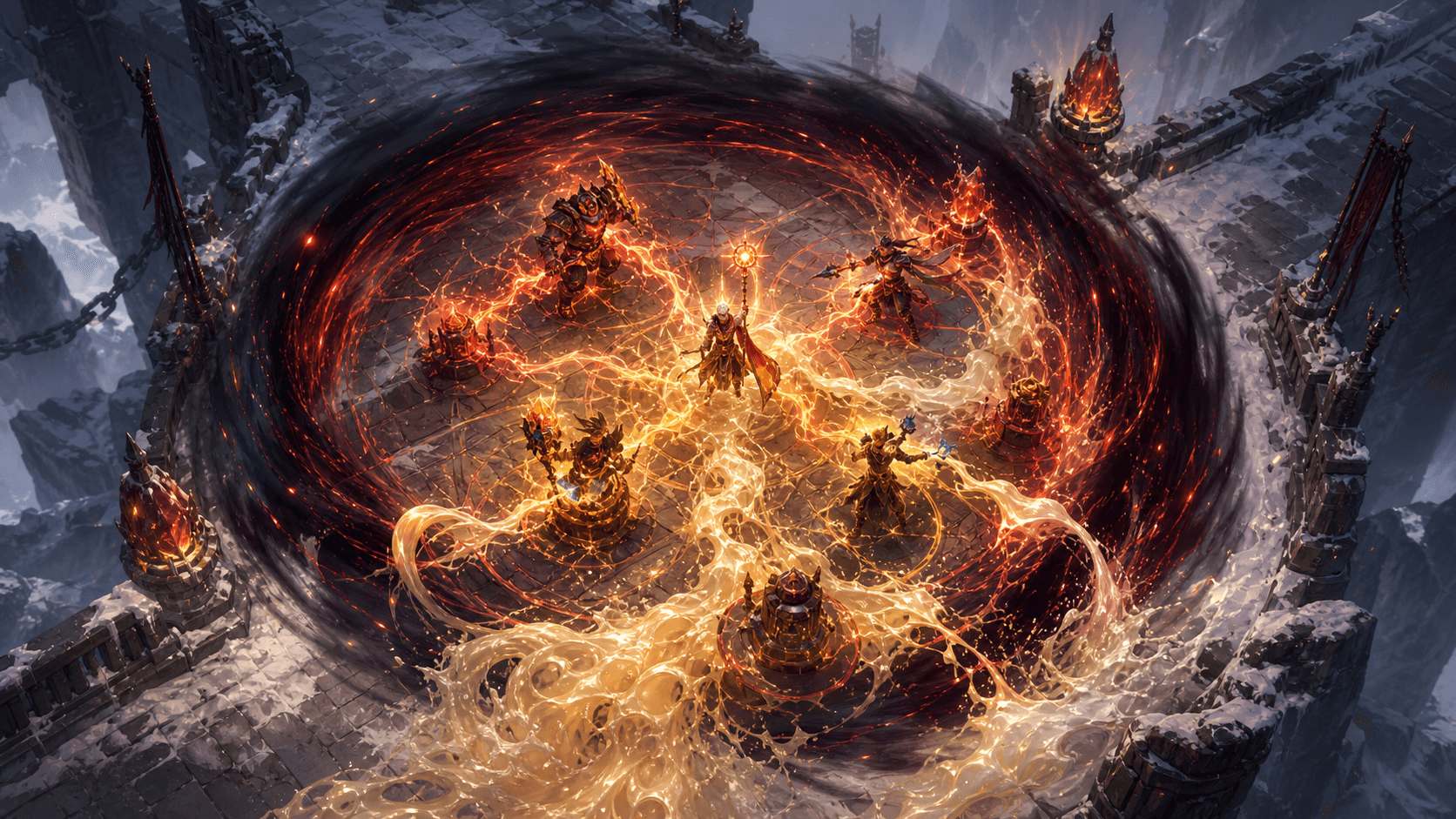
What Makes ARAM Mayhem Different From Regular ARAM
ARAM Mayhem launched on October 22, 2025, and quickly became one of the most popular rotating game modes in League of Legends history. The response was strong enough that Riot extended the mode with no end date announced, adding a 32-level progression track and over 40 new augments in Patch 26.3 alone.
The core difference from standard ARAM is the augment system, borrowed from Arena. At levels 1, 7, 11, and 15, you select one augment from a randomized pool of three. Runes are disabled entirely. You pick your augments only when your champion is dead, which creates strategic tension most players miss entirely.
With hundreds of possible augment combinations and over 160 champions in the pool, some interactions fall through the cracks. The casual playerbase talks about the obvious ones: big crit ADCs, poke mages, enchanters. These are not those.
Brand + Infernal Conduit: Zero Cooldowns, Infinite Burn
This is widely considered the most oppressive single-champion augment combo in the mode, and it is not hard to see why once you understand the loop.
Brand's passive, Blaze, applies a damage-over-time burn to every enemy he hits with an ability. Infernal Conduit reduces your ability cooldowns whenever your damage-over-time effects tick on enemies. Hit two or three enemies at once and your cooldowns evaporate almost instantly.
The feedback loop looks like this: you land a W or E, Blaze ticks on multiple targets simultaneously, each tick refunds cooldown time, and you are immediately casting again before the first animation finishes. In a real teamfight, where five enemies are stacked in melee range on the Howling Abyss, Brand effectively has no cooldowns at all.
The augments that push this even further are Vulnerability, which makes enemies take 12 percent more damage from all sources, and Ethereal Weapon, which lets your burn apply on-hit effects. With Ethereal Weapon active, building Blade of the Ruined King means your passive burn starts draining a percentage of each enemy's maximum HP on every tick. Tanks melt alongside squishies.
Most opponents have no meaningful counterplay. Heavy crowd control can interrupt the chain, but Brand's E stun keeps coming back fast enough that consistent positioning around it becomes nearly impossible.
Kassadin + Overflow + Eureka: The Scaling Terror
Kassadin is underestimated in Mayhem because he does not spike early the way some champions do. Players draft him, have a rough first ten minutes, and assume he is weak in the mode. He is not. He is patient.
Overflow converts excess mana into a shield and bonus AP. Kassadin naturally stacks mana through Rod of Ages and Manamune, so Overflow turns his item path into both defensive durability and raw damage. Eureka then grants ability haste based on your AP total, which means more AP equals lower cooldowns on Riftwalk.
The loop compounds on itself. Higher AP means lower Riftwalk cooldown through Eureka. More Riftwalk casts generate more mana value and proc more of Overflow's AP bonus. By the mid-game, Kassadin can Riftwalk every two seconds while sitting on a permanent mana shield that absorbs burst damage.
The Dashing augment, which adds 175 ability haste specifically to dash and blink abilities, stacks on top of Eureka and pushes the Riftwalk cooldown to the absolute floor. Once he hits two items and a couple of key augments, there is no realistic way to keep him out of your backline. This combination is part of why Kassadin currently holds the highest win rate among all champions tracked on arammayhem.com, dethroning Vayne for the top spot.
Zac + Circle of Death: Dying Is a Damage Ability
Circle of Death deals magic damage to nearby enemies whenever you heal. On most champions, this is a situational sustain augment. On Zac, it becomes a death sentence for everyone standing within range of him.
Zac heals constantly. His passive blob collection heals him throughout fights. His W costs HP but he recovers it naturally. His revival passive is the key piece. When Zac's blobs trigger his passive and he reforms from 0 HP to full, Circle of Death sees the entire heal as a single massive event and deals thousands of damage to everyone in the area.
What this means in practice: killing Zac is offensive. The enemy team burns him down, he hits zero, his blobs scatter, and as they scramble to kill the blobs Zac is reforming and detonating for around 2000 damage in a wide radius. Grievous Wounds reduces the healing but does not stop the damage, because Circle of Death's proc fires off healing received before reduction applies.
Pair this with Protein Shake, which amplifies healing received, and the detonation on revival hits even harder. Add Spirit Visage and Heartsteel for maximum HP and healing multipliers and the combo becomes nearly impossible to defuse through normal play.
Yasuo and Yone + Critical Healing: Unkillable Skirmishers
Critical Healing is a Prismatic augment that heals you for 12 percent of damage dealt on critical strikes and grants an additional 25 percent critical strike chance.
On paper it looks like a DPS augment. In practice, on Yasuo and Yone, it turns them into self-sustaining machines that win extended fights against nearly any champion in the mode.
Both champions already want to stack critical strike chance as their primary stat. Their item paths build into crit naturally, which means Critical Healing activates constantly without changing what you would buy anyway. In ARAM Mayhem where fights are long and grouped, the healing per second during an extended skirmish becomes significant enough to outlast most damage outputs without any additional effort.
Stack this with Soul Siphon, an omnivamp augment, and the sustain becomes genuinely unfair. Players who focus Yasuo or Yone expecting a clean kill frequently run out of damage because the target is regenerating faster than the incoming damage.
Gangplank + Back to Basics: The Early Game Nobody Expects
Most Gangplank augment discussions start at level 11 when Prismatic options appear. Back to Basics does not care about that timeline.
Back to Basics is a Prismatic augment that strips your champion down to only basic abilities but massively amplifies their damage output. On Gangplank, this means Sheen-empowered barrel detonations hit for numbers that have no business existing that early. Players tracking this interaction have reported barrel detonations in the 2000-plus damage range with just Sheen purchased and no other major items.
The reason this flies under the radar is that Gangplank is traditionally a late-game champion. Opponents expect a slow, stacking pirate early on. They do not expect to take a barrel to the face for half their HP at level 5. The early psychological pressure forces positional mistakes that snowball the entire game before the enemy team has time to assemble their own augment builds.
The Archmage Set: When the Whole Team Gets Broken
Individual champion synergies are strong, but the Archmage augment set deserves mention because it quietly enables several of the combos above simultaneously.
The Archmage set includes Overflow, Mind to Matter, Buff Buddies, Juiced, and Ocean Soul. Its core set bonus refunds a percentage of a random ability's cooldown whenever you cast any ability. For mana-heavy champions that benefit from Overflow and Eureka, like Kassadin and Ryze, completing multiple pieces of this set creates a feedback loop that stacks on top of everything else already happening.
For Brand specifically, having Buff Buddies available in the same set pool means even more ability spam layered directly on top of Infernal Conduit's passive refunds. A team that happens to draft Brand, Kassadin, and a third mage into the same game and all land Archmage pieces is effectively playing a different game from everyone else on the map.
How to Play Around These Combos
If you are on the receiving end of any of these, a few general principles apply regardless of the specific combo you are facing.
Burst before sustain kicks in. Every one of these synergies requires time to build momentum. Kassadin needs two items. Zac needs to hit his passive blobs. Brand needs to spread Blaze to multiple targets. Hard burst before the engine starts is your best window to win.
Grievous Wounds matters more in Mayhem than in regular ARAM. Executioner's Calling, Morellonomicon, and Chempunk Chainsword are never wasted gold in this mode. On a map where every fight involves sustained healing and self-healing loops, buying anti-heal early is almost always correct.
Play around augment timings. Opponents receive their third augment at level 11 and their fourth at level 15. Those are the two biggest power spikes to watch for. If you are ahead at level 10, push that advantage hard before the enemy assembles their full combo.
Conclusion
ARAM Mayhem's augment system is deeper than most casual players realize. The combos that appear on tier lists and meta discussions are the tip of the iceberg. Underneath them, champion-specific interactions with augments like Circle of Death, Infernal Conduit, and Overflow create situations that feel genuinely broken in the best possible way.
Understanding these synergies does not just help you win more. It helps you recognize when the game is already decided the moment someone picks up the right augment at level 7, and it helps you make informed decisions about when to push your own power spike or cut a losing game short and queue again.
Sources
- ARAM: Mayhem Wiki Page
- Riot Support: ARAM Mayhem Game Mode
- ARAM Mayhem Extended With No End Date
- Brand + Infernal Conduit Combo Guide
- Kassadin Overflow + Eureka Guide
- Zac + Circle of Death Guide
- Gangplank + Back to Basics Guide
- ARAM Mayhem Tier List
- ARAM Mayhem Augment Tier List and Set Combos
- Mobalytics ARAM Mayhem Patch Notes
EloFactory
Editorial insights from the EloFactory team.
Article details
Related content
Related articles
May 4, 2026
ELO boosting is when someone artificially raises a player's rank, usually by playing on their account or by manipulating ranked results. In League of Legends, Riot treats boosting as rank manipulation and ties it directly to account sharing and penalties.
Apr 18, 2026
The next League of Legends Blue Essence Emporium is already on Riot's roadmap, but the exact 2026 catalog is not fully public yet. Here is what is confirmed, what usually appears in the shop, and the fastest legitimate way to build a 250,000 BE bankroll.
Apr 17, 2026
A grounded look at the rarest League of Legends skins, how each one was originally earned, and why they no longer appear in the store.